
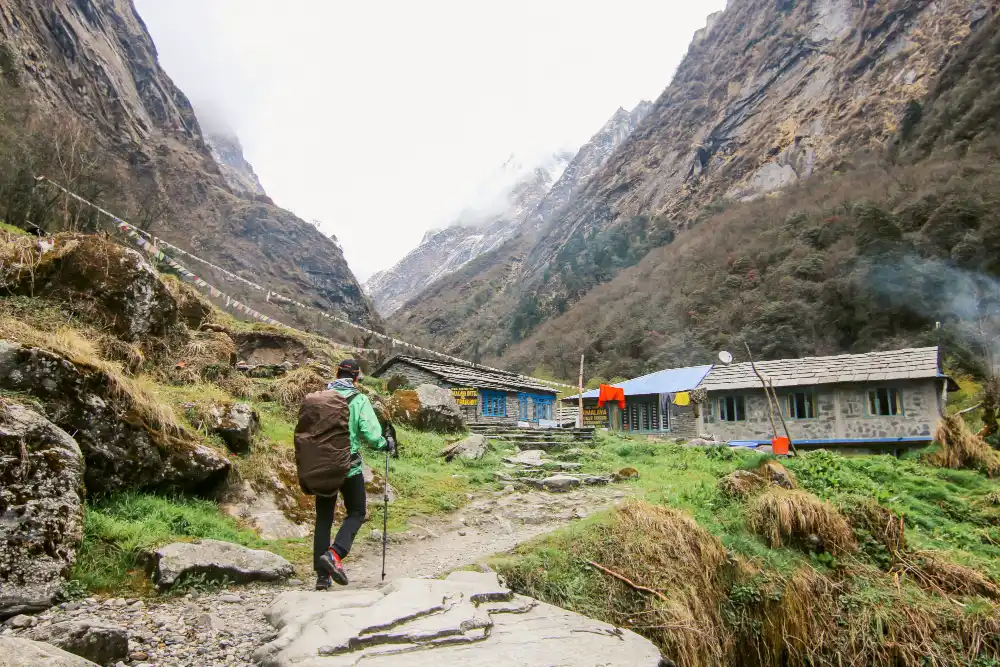
Tsum Valley- Manaslu circuit Trek for 21 Days

Tour Info

trip code

EN-022

Starting Point/ End Point

Kathmandu

Accommodations

Lodge/ Tea House

Max Altitude

5106m (Larkya La Pass)

Duration

21 days

country

Nepal

Trip grade

Moderate

Activities

Trekking

Best Season

February, March, April, May, June, September, October, November and December

Overview

Tsum Valley is a quiet and remote valley in northern Nepal, lying between the Shear Khola and Budhi Gandaki rivers. It is surrounded by glaciers from Ganesh Himal and Sringi Himal, which make the valley very beautiful. The valley is home to rare wildlife, such as Himalayan Thar and Blue Sheep, and hunting is strictly prohibited. Tsum Valley also has historic monasteries like Rachen, Mu, and Lungdang Gompa, showing its strong Buddhist culture. Mt. Manaslu, the eighth-highest mountain in the world at 8,156 meters, rising above the valley. From Tsum Valley, the trail continues into the Manaslu region, which is famous for its mountains and culture. The Manaslu Circuit goes around Mt. Manaslu, the eighth-highest mountain in the world. Villages like Dharapani, Bihi, Namrung, and Lho are along the way. You can also get views of Manaslu, Himalchuli, Ngadi Chuli, Ganesh Himal, and Annapurna II, from viewpoints like Syala, Samagaun, Manaslu Base Camp, and Larkya La Pass.

Details

Tsum Valley and the Manaslu Circuit is the place where you can experience nature and culture closely. The area is quiet, remote, and not crowded, so you can enjoy peaceful trails. You can see beautiful landscapes with tall mountains, glaciers, rivers, and green forests. The valley has many wild animals, including Himalayan Thar, Blue Sheep, marmots, and rare birds. You can visit old monasteries and walk through villages where people still follow Buddhist and Tibetan traditions.

Along the Manaslu Circuit, you can reach viewpoints like Syala, Samagaun, Manaslu Base Camp, and Larkya La Pass. From there, you can see Manaslu, Himalchuli, Ngadi Chuli, Ganesh Himal, and Annapurna II. You can explore terraced fields, apple orchards, and stone houses in the villages. You can feel the calm and peaceful atmosphere all around, and take photos of glaciers, lakes, mountains, and wildlife. Visiting this region lets you enjoy nature, learn about local culture, and see some of Nepal’s most amazing mountains.

Highlights

  • Witness the wide and peaceful landscapes of the Tsum Valley.

  • Walk around the beautiful Mt. Manaslu (8,163m) on a scenic trekking route.

  • Visit the sacred Milarepa Piren Phu Cave, also known as the Pigeon Cave.

  • Explore important monasteries like Mu Gompa and Lungdang Gompa.

  • See Dephydonma and the oldest monastery in the valley, Rachen Gompa.

  • Reach the high point of the trek at Larkya La Pass (5,106m).

  • Enjoy many side trips such as Birendra Lake, Pungyen Monastery, Tibetan Border, Ganesh Himal North Base Camp, Manaslu Base Camp, Tserang Gompa, and Kal Tal.

  • Experience clear views of glaciers, mountain peaks, lakes, and rocky landscapes.

  • Walk along parts of the old trading route that once connected Nepal and Tibet.

  • Trek on a peaceful and less-crowded trail throughout the journey.

Itinerary

Day 01: Drive from Kathmandu to Machha Khola (900m/2953 fts/155km)

The day begins early, after boarding the local bus, you set off for Machha Khola. Condition of the road is good until Arughat, and after that it becomes bumpy, but you still see nice views of hills, rivers, and small villages along the way. In around 7 to 8 hours the drive covers about 155 km, bringing you to a quiet riverside village where you rest and prepare for tomorrow’s trek.

  • Max Elevation: 1,200 meters (along the route, highest point before descending to Machha Khola)
  • Travel Distance: 155 Kilometers
  • Travel Hours: 7 to 8 hours
  • Accommodation: Tea house/Lodge
  • Meals: Breakfast, Lunch, and Dinner

Day 02: Full-Day Guided Sightseeing in Kathmandu

After breakfast, the sightseeing tour begins with a professional guide and a private vehicle. Throughout the day, you visit some of the most well-known heritage sites in Kathmandu. The guide explains the history, culture, and importance of each place you explore.

A. Swayambhunath Stupa (Monkey Temple)

Swayambhunath, also known as the Monkey Temple, is located on a hill above Kathmandu. The site is home to a large stupa and many monkeys. From here, you can enjoy calm views of the city and watch Buddhist prayers and people spinning prayer wheels.

B. Pashupatinath Temple

Pashupatinath is a sacred Hindu temple dedicated to Lord Shiva and is located along the Bagmati River. The temple features beautiful pagoda-style architecture with golden roofs and four main entrances. Visitors can observe rituals, prayers, and religious ceremonies held at the temple.

C. Bhaktapur Durbar Square

Bhaktapur Durbar Square was once the palace of ancient kings and is filled with temples, palaces, and stone statues. You explore important landmarks such as the 55-Window Palace, Nyatapole Temple, Golden Lion’s Gate, and Vatsala Temple. Walking through the square, you can see traditional Newari architecture and experience local culture.

D. Swayambhu Stupa / Monkey Temple:

Located on a small hill, Swayambhu offers a wide view of the Kathmandu Valley. It is also called the Monkey Temple because many monkeys live around the stupa. This site is very important to both Buddhists and Hindus.

  • Max Elevation: 1,450 meters (Swayambhunath Stupa)
  • Travel Distance: 25 to 30 kilometers (total driving distance)
  • Travel Time: 6 to 7 hours
  • Accommodation: 3-Star Hotel
  • Meal: Breakfast

Day 03: Trek from Machha khola to Jagat (1410m/4626ft)

You start the day with a simple breakfast around 7 AM and then begin walking toward Jagat. The trail follows the Budhi Gandaki River, and you cross a few suspension bridges on the way. After walking uphill for 3 to 4 hours, you reach Tattopani, where there is a small natural hot spring. From there, you keep trekking until you reach Jagat, a peaceful Gurung village with basic teahouses. The day takes about 6 to 7 hours and covers roughly 22.2 km.

  • Max Elevation: 1,410 meters (Jagat, the highest point between Machha Khola and Jagat)
  • Travel Distance: 22.2 kilometers
  • Travel Hours: 6 to 7 hours
  • Accommodation: Tea house/Lodge
  • Meals: Breakfast, Lunch, and Dinner

Day 04: Trek from Jagat to Lokpa (2040m/6692 ft)

Before you start your trek towards Lokpa, you can have breakfast in the morning. To reach Lokpa from Jagat, you need to cover about 17 km and which takes you around 5 to 6 hours. The trail first takes you to Salleri, where you can see the clear and stunning Shiring Himal. From there, you continue trekking for 2 to 3 hours to reach Philim, a larger village with farms, schools, and traditional stone houses. This is where the path to Tsum Valley splits, and you then continue on the trail until you arrive at Lokpa. 

  • Max Elevation: 2,040 meters (Lokpa, the highest point between Jagat and Lokpa)
  • Travel Distance: 17 kilometers
  • Travel Hours: 5 to 6 hours
  • Accommodation: Tea house/Lodge
  • Meals: Breakfast, Lunch, and Dinner

Day 05: Trek from Lokpa to Chumling (2386m/7828ft)

Enjoy a comfortable breakfast at your lodge as you prepare for the trek ahead. It takes you around 5 to 6 hours covering 8.2 km/5.0 miles, to reach Chumling from Lokpa. The day starts with an easy walk from Philim toward Lokpa. After about 2 hours, there is a lunch break at Ekle Bhatti (1600m/5249 ft). Once you have your lunch, you can continue trekking for another 2 to 2.5 hours through pine-filled trails before arriving at Lokpa. After lunch, continue trekking for 2 to 2.5 hours through pine forests until you reach Lokpa. Lokpa is the first village in the Tsum Valley, and only a few villages here are developed for tourists, so most houses are used for business.

  • Max Elevation: 2,386 meters (Chumling, the highest point between Lokpa and Chumling)
  • Travel Distance: 8.2 kilometers
  • Travel Hours: 5 to 6 hours
  • Accommodation: Tea house/Lodge
  • Meals: Breakfast, Lunch, and Dinner

Day 06: Trek from Chumling to Chhokung Paro (3031m/9944 ft)

Your day starts with a breakfast in Chumling before beginning the trek toward Chhokang Paro. The trail goes past Tanju’s water-powered prayer wheel and moves through pine forests before reaching Domje (2,460m). From Domje, you continue climbing toward Chhokang Paro, the largest village in Tsum Valley, where Lama culture is strong. Along the way, you can see terraced potato fields and get clear views of Buddha Himal and Siringi Himal. Chhokang Paro is also near a Tibetan market and a gateway to Geshe Lama Konchog’s retreat cave and Galdang Gumba. The day covers about 11 km and takes 4 to 5 hours.

  • Max Elevation: 3,031 meters (Chhokang Paro, the highest point between Chumling and Chhokang Paro)
  • Travel Distance: 11 kilometers
  • Travel Hours: 4 to 5 hours
  • Accommodation: Tea house/Lodge
  • Meals: Breakfast, Lunch, and Dinner

Day 07: Trek from Chhokung village to Nile (3361m/11026fts)

Following your morning meal at the lodge, the journey to the Nile continues with an easy and refreshing start. The journey to the Nile is about 11 km and takes most of the day, around 4 to 5 hours. The trail slowly goes uphill through small villages and fields with mountains around. You pass local farms and houses and see how people live in Tsum Valley. 

  • Max Elevation: 3,361 meters (Nile, the highest point between Chhokung Paro and Nile)
  • Travel Distance: 11 kilometers
  • Travel Hours: 4 to 5 hours
  • Accommodation: Tea house/Lodge
  • Meals: Breakfast, Lunch, and Dinner

Day 08: Acclimatization day and detour to Mugu Gompa (3700m/12139ft)

After breakfast, you start a trek toward Mu Gompa. Taking a rest day at higher elevation is an important part of safe trekking. Acclimatization day helps your body adjust to the higher altitude, which is important to avoid sickness. This trek from Nile to Mugu Gompa covers about 8 km and takes you around 3 to 4 hours. The trail first passes Rachen Gompa, the largest nunnery in Tsum Valley, where about 200 nuns live and follow their traditions. You then continue to the Nile, a small village known for its tasty potatoes and houses. After lunch at Chho Syong, the trail ascends steadily to Mu Gompa, a monastery for male monks. You can explore the area and the old monastery with its statues and artifacts. 

  • Max Elevation: 3,700 meters (Mugu Gompa, the highest point between Nile and Mugu Gompa)
  • Travel Distance: 8 kilometers
  • Travel Hours: 3 to 4 hours
  • Accommodation: Tea house/Lodge
  • Meals: Breakfast, Lunch, and Dinner

Day 09: Trek from Nile to Chhokung paro (3031m/9944 fts)

You begin the trek back toward Chhokang Paro, after having breakfast at Mu Gompa. The trail passes through a few small farm villages where cattle are raised, with some short climbs and descents along the way. It takes about 3 to 4 hours to cover the 6 km distance to Rachen Gompa, where you can explore the monastery’s historical and religious artifacts. You can see statues of famous Gurus and the idol of Sakaymuni Buddha. After lunch at Rachen Gompa, you continue downhill to reach Chhokang Paro, where you can have dinner and spend the night at the lodge.

  • Max Elevation: 3,700 meters (Mugu Gompa, the highest point between Nile and Chhokang Paro)
  • Travel Distance: 6 kilometers
  • Travel Hours: 3 to 4 hours
  • Accommodation: Tea house/Lodge
  • Meals: Breakfast, Lunch, and Dinner

Day 10: Trek from Chhokung paro to Gumba Lung Dang (3240m/10629 fts)

After having breakfast at Chhokang Paro, then begin the trek to reach Gumba Lung Dang. The trek takes about 3 to 4 hours to cover roughly 6 km and reach Gumba Lung Dang, a quiet village at 3,240 m with a small monastery and teahouses. You can rest and enjoy the peaceful surroundings. After dinner at the lodge, you rest and stay overnight in Gumba Lung Dang.

  • Max Elevation: 3,240 meters (Gumba Lung Dang, the highest point between Chhokang Paro and Gumba Lung Dang)
  • Travel Distance: 6 to 7 kilometers
  • Travel Hours: 3 to 4 hours
  • Accommodation: Tea house/Lodge
  • Meals: Breakfast, Lunch, and Dinner

OR

Trek from Chhokung Paro to Lokpa (2040m/6692ft)

After leaving Chhokung Paro, the last village of Tsum Valley, the trek heads toward the higher Manaslu Valley on the route to Larke La Pass. The trail passes small farm villages and climbs through terraced fields of wheat and barley. You reach a rocky ridge covered with bamboo forest and stop briefly at Eklai Bhatti, a small, quiet inn. After resting, the trek continues to higher ground in Upper Manaslu, where the route turns northwest to reach Deng, a small and peaceful village for the overnight stay. You reach Lokpa from Chhokung Paro covering about 19 km in 6 to 7 hours.

  • Max Elevation: 2,040 meters (Lokpa, the highest point between Chhokung Paro and Lokpa)
  • Travel Distance: 19 kilometers
  • Travel Hours: 6 to 7 hours
  • Accommodation: Tea house/Lodge
  • Meals: Breakfast, Lunch, and Dinner

Day 11: Trek from Gumba Lung dang to Lokpa (2040m /6692 ft)

The trek from Gumba Lung Dang takes you to Lokpa, which takes you around 6 to 7 hours to reach. Gumba Lung Dang is a small and quiet village in Tsum Valley at 3,240 m (10,629 ft). The village has a few stone houses and a small monastery showing the local Buddhist culture. There are simple teahouses where trekkers can rest, eat, and stay overnight. It is a good place to stop and adjust to the altitude while enjoying views of the nearby mountains and valley.

  • Max Elevation: 3,240 meters (Gumba Lung Dang, the highest point between Gumba Lung Dang and Lokpa)
  • Travel Distance: 12 kilometers
  • Travel Hours: 6 to 7 hours
  • Accommodation: Tea house/Lodge
  • Meals: Breakfast, Lunch, and Dinner

Or
Trek from Lokpa to Bhi village (2130m)
From Lokpa, the path moves out of Tsum Valley onto the Manaslu trail. The path rises and falls through several sections, with some parts carved along cliff edges, offering impressive views. The day covers about 17 km and takes you around 7 to 8 hours as you approach Deng village. From Deng village the trail becomes easier and the surroundings take on more Tibetan-style houses and terrain. After a few hours, you reach Bihi Phedi, a village where most people are of Tibetan lives and follow traditional culture. Bihi Phedi is also the only place in the area with a phone signal. You can also observe locals farm crops like buckwheat, wheat, barley, and potatoes, and grow vegetables such as spinach, carrots, and cabbage.

  • Max Elevation: 2,130 meters (Bihi Phedi, the highest point between Lokpa and Bihi Phedi)
  • Travel Distance: 17 kilometers
  • Travel Hours: 7 to 8 hours
  • Accommodation: Tea house/Lodge
  • Meals: Breakfast, Lunch, and Dinner

Day 12: Trek from Bhi village to Serang Monastery (4130m)

The trek from Bhi Village climbs steadily toward Serang Monastery at 4,130 m. The trail passes through small farms, traditional stone houses, and fields where locals grow buckwheat, barley, and potatoes. You get views of the surrounding mountains as you walk through this high valley region. This trek takes you around 7 to 8 hours to reach Serang Monastery from Bhi village. It is also possible to take a detour to Serang Monastery and return the same day, giving you a chance to see the monastery closely without staying overnight. The day ends back in the village or at a nearby lodge.

  • Max Elevation: 4,130 meters (Serang Monastery, the highest point between Bhi Village and Serang Monastery)
  • Travel Distance: 14 kilometers
  • Travel Hours: 7 to 8 hours
  • Accommodation: Tea house/Lodge
  • Meals: Breakfast, Lunch, and Dinner

Day 13: Trek from Serang to Ghap (2160m/7085ft)

Trek continues from Serang Monastery to Ghap, covering about 18 km (11.2 miles) in 7 to 8 hours. Ghap is a Sherpa village with tea houses and lodges where you can rest, have meals, and spend the night comfortably. The trail goes through small villages and valleys, letting you see how local people live. You can enjoy views of Shingri Peak and other nearby mountains along the way. The path is not too difficult, with gentle ups and downs, helping you get ready for higher altitudes ahead. 

  • Max Elevation: 4,130 meters (Serang Monastery, the highest point between Serang and Ghap)
  • Travel Distance: 18 kilometers
  • Travel Hours: 7 to 8 hours
  • Accommodation: Tea house/Lodge
  • Meals: Breakfast, Lunch, and Dinner

Day 14: Trek from Ghap to Lho Village (3180/10433fts/10.5km/6.5mile)

From Ghap, it is a 16 km (9.9 miles) trek to Lho Village, which usually takes 4 to 5 hours. You pass through valleys and villages with views of Manaslu (8,163 m) and mountains like Ngadi Chuli. Lho is a Tibetan-style village with traditional houses, mani walls, and a few tea houses where you can stay overnight. This shorter section gives time to enjoy the mountain scenery, observe local life, and get ready for the higher altitude trekking in the next few days.

  • Max Elevation: 3,180 meters (Lho Village, the highest point between Ghap and Lho Village)
  • Travel Distance: 16 kilometers
  • Travel Hours: 4 to 5 hours
  • Accommodation: Tea house/Lodge
  • Meals: Breakfast, Lunch, and Dinner

Day 15: Trek from Lho village to Samagaon (3530m/11582 fts/8.1km/5 mile)

To reach Samagaon from Lho, it takes you 8.1km in around 4 to 5 hours. Passing through Lho, you see fields of potatoes, corn, and barley, along with Lho Monastery, which reflects Sherpa traditions. From here, it takes around 2 hours to reach Shyala, offering panoramic views of Manaslu, Himalchuli, and Naike Peak. A short walk from Shyala leads to Pungen Gumba, where you can enjoy the mountain scenery and perfect for meditation.

  • Max Elevation: 3,530 meters (Samagaon, the highest point between Lho Village and Samagaon)
  • Travel Distance: 8.1 kilometers
  • Travel Hours: 4 to 5 hours
  • Accommodation: Tea house/Lodge
  • Meals: Breakfast, Lunch, and Dinner


Day 16: Acclimatization day and detour to Manaslu base camp (4800m/15749ft)

This day focuses on acclimatization and a walk to Manaslu Base Camp, reaching 4,800 m (15,749 ft). The trail gradually climbs through small villages and open fields, giving views of surrounding mountains and glaciers. You can spend time at the base camp, enjoy the scenery, and take photos before returning. The trek takes 6 to 7 hours, helping your body adjust to higher altitudes while preparing for the next stage of the journey.

  • Max Elevation: 4,800 meters (Manaslu Base Camp, the highest point on the acclimatization hike)
  • Travel Distance: 14 kilometers (round trip from Samagaon)
  • Travel Hours: 6 to 7 hours
  • Accommodation: Tea house/Lodge
  • Meals: Breakfast, Lunch, and Dinner

Day 17: Trek from Samagaon to Samdo (3860m/12665fts/8.1km/5.03mile)

From Samagaon to Samdo, the trek is roughly 8.1 km (5.03 miles) and takes 3 to 4 hours. The trail is mostly flat, offering clear views of Samdo Peak along the way. Samdo is the last village before Larke Pass and serves as a connection point between Nepal and Tibet. The locals often go hunting for Yarshagumba in the surrounding mountains. You settle into a lodge in Samdo where lunch and dinner are served, and spend the night preparing for the higher-altitude trekking ahead.

  • Max Elevation: 3,860 meters (Samdo, the highest point between Samagaon and Samdo)
  • Travel Distance: 8.1 kilometers
  • Travel Hours: 3 to 4 hours
  • Accommodation: Tea house/Lodge
  • Meals: Breakfast, Lunch, and Dinner

Day 18: Trek from Samdo to Dharamshala (4460m/14633fts/6.6km/4.10mile)

Trekking from Samdo to Dharamshala, takes you around 4 to 5 hours covering about 6.6 km (4.10 miles), with an uphill climb of around 600 meters. Here the accommodation consists of a teahouse with shared rooms and limited facilities or in a tent, as the area is remote and basic. Strong winds and cold temperatures make rest important. Dharamshala offers great opportunities for photography with panoramic views of the surrounding peaks. You can have dinner at the camp or teahouse, and spend the night at Dharamshala.

  • Max Elevation: 4,460 meters (Dharamshala, highest point on this section)
  • Travel Distance: 6.6 kilometers
  • Travel Hours: 4 to 5 hours
  • Accommodation: Tea house/Lodge
  • Meals: Breakfast, Lunch, and Dinner


Day 19: Trek to Bhimthang via Larkya La pass (5106m/16752fts,24.5km/15.22mile)

Trekking from Dharamshala to Bhimthang through Larkya La Pass today covers about 24.5 km (15.22 miles) and takes nearly 10 to 11 hours. Early in the morning, the hike begins toward Larkya La Pass at 5,106 m (16,752 ft), climbing steep snow trails in a windy environment. From the pass, you can see Larke Peak and Punker Mountain. After descending for about 2 hours to Phedi and another 2 hours to Bhimthang. The village offers beautiful views of the Manang region and surrounding mountains, including Annapurna South.

  • Max Elevation: 5,106 meters (Larkya La Pass, the highest point between Dharamshala and Bhimthang)
  • Travel Distance: 24.5 kilometers
  • Travel Hours: 10 to 11 hours
  • Accommodation: Tea house/Lodge
  • Meals: Breakfast, Lunch, and Dinner

Day 20: Trek from Bhimthang to Goa village /Tilche (2300/7546 fts)

You can then continue your trek from Bhimthang to Goa Village/Tilche, a beautiful 26 km (16.1 miles) journey that usually takes around 6 to 7 hours. The route descends steeply along Dudhkhola, passing small hydropower projects and teahouses before reaching Chaulikharka in about 2 hours. From there, it takes around 1 hour and 15 minutes to Surtikhola, where lunch is served. After another hour, the trail follows well-built paths toward Goa. Tilche, a Gurung village with traditional homes, caves, and a suspension bridge, is reached in about an hour.

  • Max Elevation: 3,720 meters (Bhimthang, the highest point between Bhimthang and Goa Village/Tilche)
  • Travel Distance: 26 kilometers
  • Travel Hours: 6 to 7 hours
  • Accommodation: Tea house/Lodge
  • Meals: Breakfast, Lunch, and Dinner

Day 21: Trek to Dharapani and Drive to Kathmandu and Pokhara

Tilje to Dharapani is the last part of the trek, covering the downhill in about 1.5 to 2 hours. From Dharapani, you can travel by public or private vehicle to Kathmandu or Pokhara,  covering about 215 km to Kathmandu or 133 km to Pokhara in 9 to 10 hours. The route follows the Trisuli River and joins the main Kathmandu to Pokhara highway, with a stop for lunch along the way. You reach your hotel in the afternoon, with free time for personal activities. 

  • Max Elevation: 1,860 meters (Dharapani, the highest point between Tilje and Dharapani)
  • Travel Distance: 215 kilometers to Kathmandu / 133 kilometers to Pokhara
  • Travel Hours: 1.5 to 2 hours trekking and 9 to 10 hours drive
  • Accommodation: Tea house/Lodge
  • Meals: Breakfast, Lunch, and Dinner

What's included

  • All accommodations in lodges/tea houses during the treks 

  • All standard meals (breakfast, lunch, and dinner) during the trek

  • Transport- Tourist to Soti khola or Machha khola and Sharing jeep from Dharapani to besisahar to kathmandu(local bus are available every morning )

  • All necessary paper works, Conservation entry permits, Manasalu special permit for 7 days and TIMS permit

  • An experienced professional english speaking Guide

  • Salary, Food, Drinks, Accommodation, Transportation and Insurance for the Guide and Porter

  • Farewell dinner in Kathmandu in a typical Nepali restaurant with a cultural dance performance in the evening

  • Medical kit (carried by your trek leader)

  • Rescue operation arrangement in case of emergency conditions (funded by travel insurance)

  • Trekking map

  • All necessary paperwork and trekking permits (National Park Permit, TIMS)

  • First Aid Kit (carried by your trek leader)

  • All government taxes and official expenses

  • Guaranteed Departures

  • Lifetime Deposit

  • No Booking Fee

  • Hot drinks (tea and coffee 3 times in day)

  • Purified drinking water

What's excluded

  • International airfare

  • Nepal entry visa; you can obtain a visa easily upon your arrival at Tribhuvan

  • International Airport in Kathmandu

  • Travel insurance (if there is emergency)

  • Lunch and Dinner while you are in Kathmandu and Pokhara

  • Beverage (cold drinks and hard drinks

  • Wifi, Battery charges, hot shower

  • Your personal expenses

  • City sightseeing and entrance fees (See sightseeing and entrance fees)

  • Flight ticket Kathmandu-Pokhara-Kathmandu and Pokhara to Jomsom

  • Tips for the guide (Tipping is Expected)

  • Items and transportation are not included and mentioned in itinerary

User Review